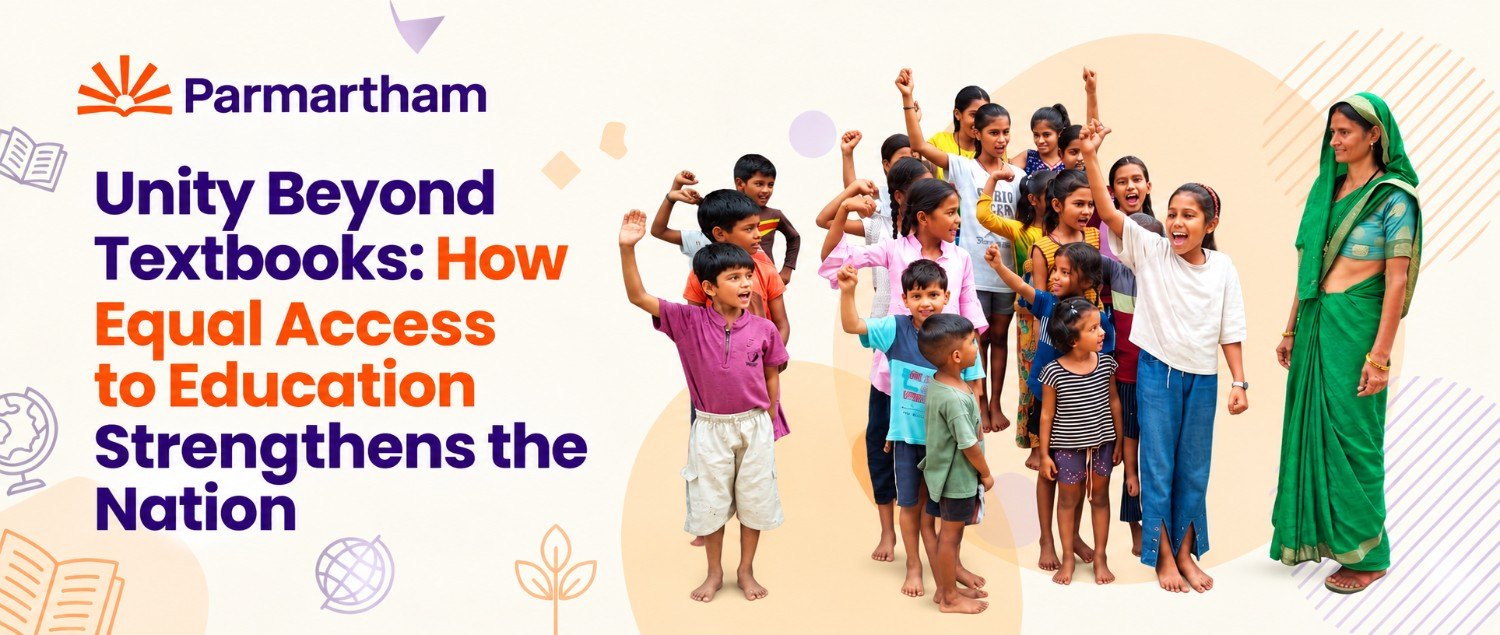
Picture two children born in India on the same day. One lives in a well-connected Jaipur neighbourhood with a good school close by, internet at home and adults who know how college admissions and job applications work. The other lives in a basti or a remote village, where the nearest good school may be far away, books are shared between siblings, and the family’s budget often decides how far a child can study.
Both children will sing the same national anthem, celebrate the same festivals and call themselves Indian. Yet if one has every path to opportunity open and the other has very few, our national unity is still unfinished. Rashtriya Ekta Diwas, observed on 31 October each year to mark the birth anniversary of Sardar Vallabhbhai Patel, reminds us that unity also depends on whether every citizen has a fair share in the country’s future.
Sardar Patel, remembered as the Iron Man of India, played a decisive role in bringing the princely states together into one independent nation. National Unity Day was first observed in 2014 to honour this contribution and to renew the nation’s commitment to solidarity.
The unity Sardar Patel worked for has to be lived, and cannot remain confined to textbooks, parades and speeches. It takes shape when a child in a village and a child in a city both feel that the country belongs to them equally and that similar futures are within their reach. That feeling is first formed in school.
The classroom is one of the few spaces where children of different castes, communities, incomes and languages sit side by side. Equitable education teaches them reading, mathematics and science, and it also teaches them to see each other as classmates, teammates and fellow citizens.
India’s diversity is a source of strength. Unequal access to education, however, can slowly turn that diversity into distance.
A child without quality schooling is more likely to end up in low-paid and insecure work. A young person without digital skills is kept out of jobs that could change a family’s circumstances. A girl who drops out early loses the confidence, income and independence that education could have given her. Over time, these individual setbacks add up to social divides.
The gap between rural and urban education deserves particular attention. City children usually have easier access to private schools, coaching, libraries, the internet and career guidance. Children in villages and urban slums often contend with too few trained teachers, limited learning material, unsafe or unavailable transport and a lack of role models. The difference shows up in marks, and even more in confidence, exposure and opportunity.
When only some young people are equipped for the modern economy, the country advances unevenly, and large sections of its people are left behind.
Equal access to education is among the most effective tools for national integration because it builds shared capability.
A first-generation learner who finishes school goes on to guide her younger siblings, her neighbours and, later, her own children. A young man from a low-income family who acquires employable skills gains a steadier income and a stronger sense of belonging. When girls are educated and trained, their households and communities progress along with them.
Education also gives young people a common set of tools: literacy, digital confidence, communication skills, professional conduct and awareness of their rights. These abilities determine who can apply for a job, start a business, use government services, take part in community decisions and speak up with dignity. A nation grows more united when its young people share these capabilities, whatever their background.
At Parmartham, a Jaipur-based NGO working in education, mentorship and skill development, we think of education as a SETU, a bridge that Skills, Enables, Transitions and Uplifts children and youth.
Our work starts from a simple belief: talent exists everywhere, while opportunity does not. A child from an underserved community may have intelligence, ambition and resilience, and still lack the guidance, resources and encouragement needed to turn that potential into a livelihood.
We work to close this gap through:
• Education support for underprivileged students, so that learning is not limited by family income
• Mentorship and values-based learning that help young people build confidence, discipline and clarity about their future
• Skill development and employability training that prepare youth for the workplace as well as for examinations
• Career guidance and exposure that show students possibilities beyond their immediate surroundings
For us, national unity means that a child’s postcode, gender, caste, language or family income should not limit how far she can go.
Imagine a Jaipur where a student from a basti and a student from an affluent colony receive the same guidance to prepare for higher education. Imagine a Rajasthan where a young woman trained in tailoring, computers or healthcare can earn a dignified living, in a city or in a village. Imagine workplaces where people from different regions and communities work together because they had comparable chances to learn.
This kind of unity does not ask anyone to give up who they are. India has always drawn strength from its many languages, cultures, faiths and traditions. What it needs is a fair starting point for every child and young person: quality education, mentorship, skills and access to opportunity.
No single organisation can achieve educational equity on its own. If you believe India’s unity must include every child, you can:
• Donate to support education, mentorship and skill training for underprivileged children and youth
• Volunteer as a mentor, teacher, career guide or communicator
• Spread the word among families and young people who may not know such support is available
• Partner with Parmartham to widen access to learning and livelihood opportunities
This Rashtriya Ekta Diwas, on 31 October 2026, let us honour Sardar Vallabhbhai Patel by working to build unity in practice, one classroom, one child and one opportunity at a time.
Also Read:
1. Beyond the Flames: The Lessons of Dussehra for a Better Tomorrow
2. World Mental Health Day: Making Mental Wellbeing Part of Everyday Life
3. Antyodaya Diwas: Why India's Progress Is Measured at the Last Doorstep
4. When She Earns, the Family Rises: How Women's Economic Independence Strengthens Families
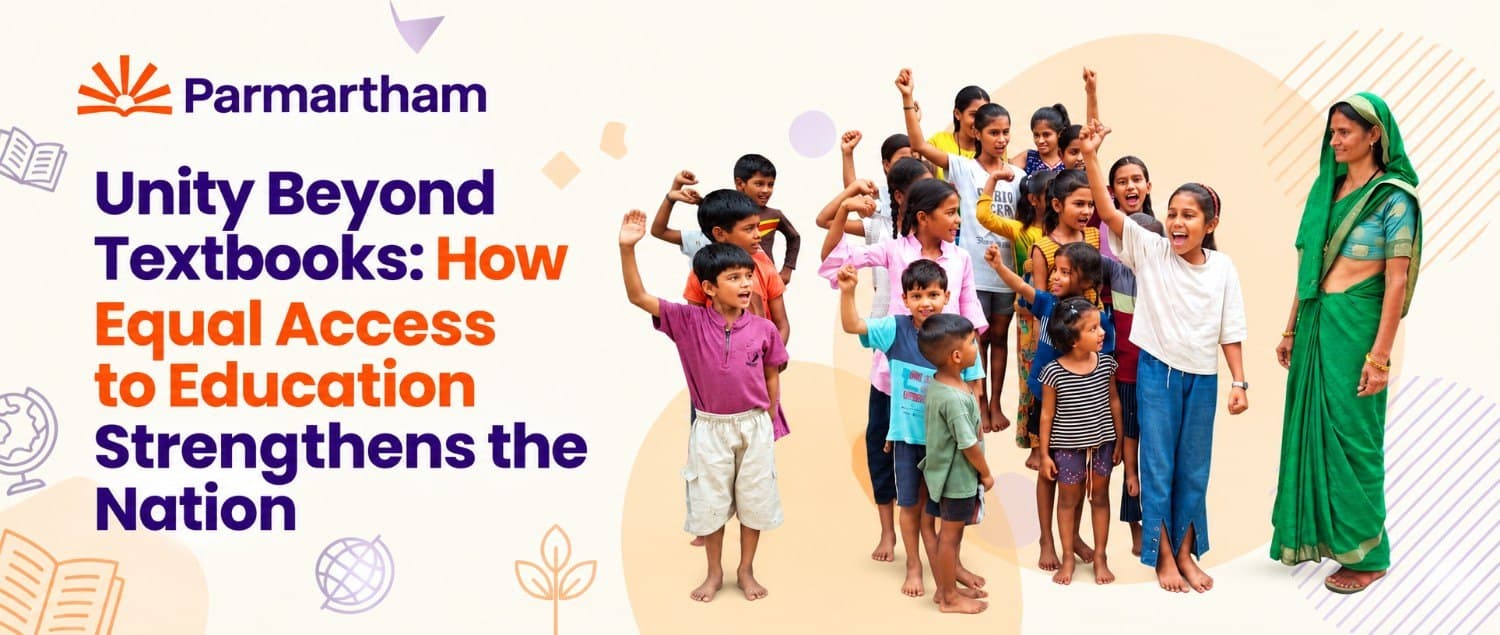
Explore how equal access to education, mentorship and skills can strengthen national unity in India and create fairer opportunities for every child.
Discover the meaning of Dussehra through education, compassion and skill development, and how Parmartham empowers young people to build a brighter future.
This World Mental Health Day, learn why mental wellbeing matters and how Parmartham supports it through student counselling, daily yoga and camps open to all.
Learn the meaning of Antyodaya Diwas and how Parmartham, a Jaipur NGO, helps youth and women become self-reliant through free skill training under Kaushal Vikas.