


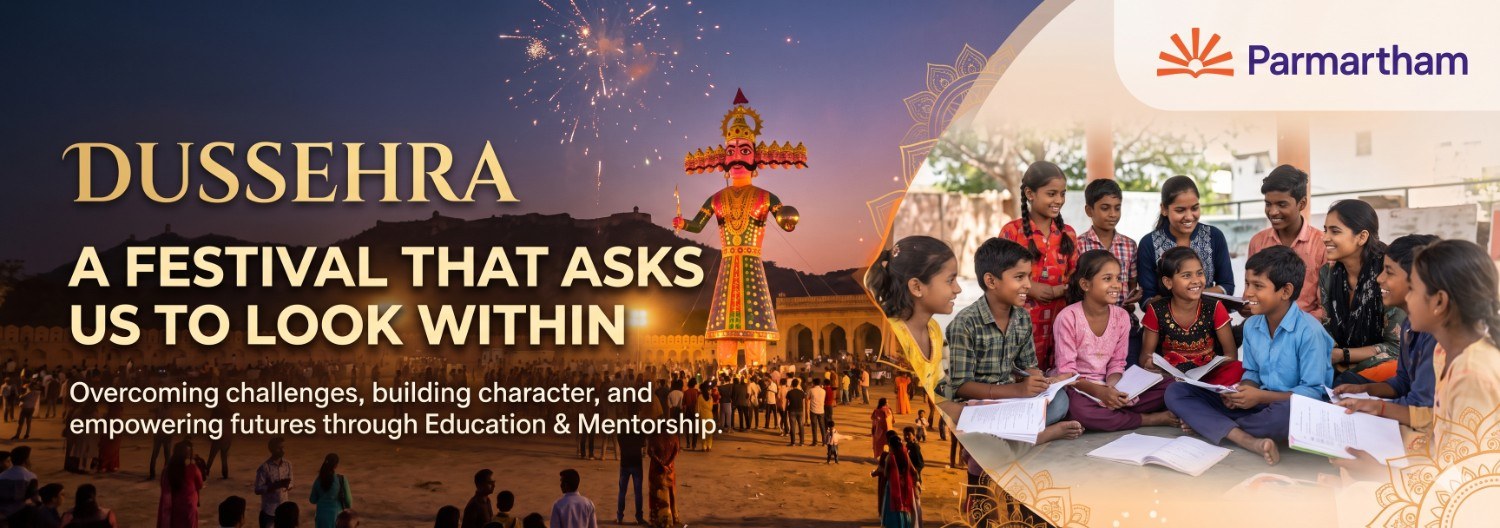
Every year, as Dussehra approaches, open grounds across Jaipur begin to fill with towering effigies of Ravana. Wooden frames, colourful decorations, and festive preparations signal the arrival of Vijayadashami. As evening falls, crowds gather to watch the effigies burn, fireworks light up the sky, and the familiar story of the victory of good over evil comes alive once again.
For many, Dussehra brings back childhood memories of Ramlila performances, family gatherings, and the excitement of watching Ravana's effigy fall. Yet, beyond these celebrations lies a message that remains relevant long after the festivities end.
What does it truly mean for good to triumph over evil in our everyday lives? Is victory simply about defeating a wrongdoer, or does it also mean overcoming the fears, prejudices, and limitations that prevent us from becoming better individuals?
Perhaps the most meaningful way to celebrate Dussehra is to look beyond the familiar rituals and reflect on the changes we can bring about within ourselves and our communities.
At Parmartham, where education, mentorship, and skill development are central to creating opportunities for underserved communities, this reflection holds particular significance. Every child who gains confidence, every student who overcomes an academic challenge, and every young person who discovers a new possibility represents a step towards a brighter future.
This Dussehra, let us explore how the festival's timeless message connects with education, character building, and the collective responsibility to create a society where every individual has the opportunity to learn, grow, and succeed.
Dussehra, also known as Vijayadashami, is celebrated on the tenth day of the bright half of the Hindu month of Ashwin, following the nine nights of Navratri. The festival is associated with two important stories in Indian tradition, both carrying the message of righteousness overcoming destructive forces.
In the Ramayana, Lord Rama defeats Ravana, whose knowledge and abilities are overshadowed by his arrogance and wrongdoing. In another widely celebrated tradition, Goddess Durga defeats Mahishasura, symbolising the triumph of divine strength over evil.
Across India, these stories are remembered through diverse cultural practices. In northern India, Ramlila performances bring the story of Lord Rama to life, often culminating in the burning of Ravana's effigy. In Bengal, Vijayadashami marks the farewell to Goddess Durga through immersion ceremonies. In parts of southern India, books, tools, and instruments are honoured during Ayudha Puja. In Kerala, Vijayadashami is associated with Vidyarambham, a tradition that marks the beginning of a child's formal learning journey.
Rajasthan has its own traditions, including the worship of the shami tree, associated with the khejri in the region. The practice is linked to the story of the Pandavas retrieving their weapons after a period of concealment, symbolising preparation and readiness for the challenges ahead.
Although the customs differ, these traditions share a common message: truth, courage, responsibility, and righteousness are values worth upholding.
Dussehra also represents both an ending and a beginning. It encourages us to leave harmful habits behind while finding the strength to begin again with renewed purpose.
This idea is especially meaningful in education, where every new lesson, every correction, and every opportunity to improve can become the beginning of something better.
One of the most thought-provoking aspects of the story of Ravana is that he was not simply portrayed as an ignorant or incapable individual. In traditional accounts, he was a learned scholar, a gifted musician, and a devoted worshipper of Lord Shiva.
Yet, despite his knowledge and abilities, his actions ultimately led to his downfall.
This offers an important lesson for our times: knowledge alone is not enough; it must be accompanied by wisdom, humility, and responsibility.
The ten heads of Ravana are often interpreted symbolically as representing the many negative tendencies that can take control of a person's judgement, including anger, pride, envy, greed, and ego. The annual burning of his effigy can therefore be understood as a reminder that the challenges represented by Ravana are not confined to an ancient story. They can also appear in our own attitudes, decisions, and behaviour.
In contemporary society, these tendencies may take the form of dishonesty, discrimination, intolerance, bullying, or indifference towards the difficulties faced by others.
For children and young people, learning to recognise and overcome such tendencies is an important part of growing up. Academic knowledge can help a student succeed in an examination, but empathy teaches them to respect others. Intelligence can help solve a problem, but integrity guides them to solve it honestly. Ambition can provide direction, but humility helps them learn from mistakes.
This is why education must extend beyond textbooks and examinations. It should also help young people develop sound judgement, emotional maturity, and a sense of responsibility towards the people around them.
At Parmartham, this perspective reinforces the importance of holistic development: helping students grow not only in knowledge and skills but also in confidence, character, and their ability to contribute positively to society.
The Ramcharitmanas offers another meaningful perspective on victory through a passage in which Lord Rama describes a chariot built not from material possessions but from qualities of character.
The passage begins:
सौरज धीरज तेहि रथ चाका। सत्य सील दृढ़ ध्वजा पताका॥
बल बिबेक दम परहित घोरे। छमा कृपा समता रजु जोरे॥
- Ramcharitmanas, Lanka Kand
The verses describe courage and patience as the wheels of the chariot, truth and good conduct as its flag, and strength, discernment, self-restraint, and concern for others as its horses. Forgiveness, compassion, and equanimity serve as the reins that hold it together.
The image is powerful because it reminds us that the foundations of a meaningful victory are not wealth, weapons, or outward displays of power. They are qualities that a person develops gradually through everyday choices, experiences, and practice.
A student who continues working on a difficult subject demonstrates patience. A young person who admits a mistake shows honesty. Someone who supports a struggling classmate practises compassion. A learner who accepts a disappointing result and prepares to do better demonstrates resilience.
These actions may not attract public attention, but they reflect genuine growth.
Dussehra therefore invites us to reconsider how we define success. True victory is not merely about reaching a destination; it is also about the person we become along the way.
One of the most important lessons we can draw from Dussehra is that meaningful change requires more than good intentions. It requires knowledge, guidance, determination, and opportunities to act.
Education plays a vital role in this process.
For children from underserved communities, the journey towards a brighter future may involve challenges beyond academic ability. Financial constraints, limited access to learning resources, a lack of career guidance, and unequal exposure to opportunities can make it difficult for talented students to realise their potential.
These barriers do not define a child's intelligence or ambition. However, without the right support, they can restrict the choices available to that child.
Education helps change this situation by opening doors to knowledge, developing critical thinking, and enabling young people to make informed decisions about their futures. It equips students with the tools to understand the world around them and participate in shaping it.
But education is about more than passing examinations or earning qualifications. It also involves learning to communicate respectfully, solve problems, work with others, make ethical decisions, and remain resilient when circumstances become difficult.
When a student receives academic support alongside mentorship and encouragement, education becomes a foundation for personal growth as well as professional opportunity.
In this sense, the spirit of Dussehra can be reflected in every learning milestone: overcoming self-doubt, developing a new skill, asking a question without fear, and continuing to work towards a goal despite setbacks.
The victory may not always be dramatic or immediately visible. Sometimes, it begins with a student believing that a different future is possible.
Dussehra symbolises the victory of good over evil, reminding us that true victory begins within ourselves. At Parmartham, we strive to bring this spirit to life by empowering children and young people through education, mentorship, and skill development.
Just as Lord Rama's victory over Ravana represents the triumph of righteousness, we believe every step towards overcoming fear, ignorance, and negative tendencies is a victory in itself.
At Parmartham, the true spirit of Dussehra lies in nurturing individuals who are knowledgeable, confident, compassionate, and independent helping them conquer the Ravana within and build a brighter future.
Festivals become more meaningful when their lessons find a place in everyday life. Dussehra offers an opportunity for individuals, families, educational institutions, and organisations to turn reflection into action.
Here are a few simple ways to carry its message forward.
Encourage a child to learn something new. Sharing a book, helping with a difficult subject, or encouraging curiosity can make learning more accessible and enjoyable.
Practise kindness and inclusion. Treat people with dignity, respect differences, and challenge unfair behaviour. Small acts of empathy can help create environments in which everyone feels valued.
Support education and mentorship. Volunteering time, sharing professional knowledge, and helping students explore career opportunities can contribute to their growth and confidence.
Choose honesty in everyday decisions. Integrity is demonstrated through ordinary actions, including admitting mistakes, fulfilling commitments, and treating others fairly.
Help young people discover their potential. Encouragement can make a difference when a student doubts their abilities or feels uncertain about the future. Listening without judgement and offering practical guidance can help them take their next step.
Support initiatives that create lasting opportunities. Individuals, volunteers, educational institutions, and responsible corporate partners can contribute to efforts that improve access to education and skill development.
None of these actions requires a grand celebration. Their value lies in consistency and the positive influence they create over time.
A supportive conversation can help a student regain confidence. Guidance can help someone make a better-informed decision. Access to education can expand the possibilities available to an entire family.
For organisations, Dussehra can also be an opportunity to reflect on how their work contributes to a more equitable society. Sustained partnerships, meaningful volunteering, and support for educational initiatives can help turn shared values into practical action.
The goal is not simply to celebrate goodness for one day, but to make thoughtful, responsible action part of everyday life.
One of the most beautiful aspects of Dussehra is its association with new beginnings. While the festival celebrates the end of a struggle, it also reminds us that every ending can create space for a fresh start.
In Kerala, Vidyarambham marks the beginning of a child's learning journey. In other traditions, books and tools are honoured as objects that support knowledge, work, and progress.
These customs remind us that learning deserves respect and that no one is ever too far along to begin again.
A student who receives a disappointing examination result can approach the next one with renewed determination. A young person who struggles with a new skill can continue practising. A mentor can learn from experience and improve the way they support students. Every setback can become an opportunity for reflection and growth.
For an organisation working in education, this is an especially meaningful message. Progress is rarely a straight line, and every student's journey is different. What matters is the opportunity to keep learning, the encouragement to continue, and the support needed to move forward.
At Parmartham, the belief that every child deserves an opportunity to learn and grow lies at the heart of the organisation's work. By supporting students through education, mentorship, and skill development, we can help create an environment in which their abilities have the opportunity to flourish.
The responsibility for building such a future does not rest with one organisation alone. Families, teachers, communities, volunteers, and responsible corporate partners all have a role to play in creating opportunities and reducing barriers.
When these efforts come together, the impact can extend beyond individual students to families and communities, helping create a more inclusive society.
Dussehra reminds us that the victory of good over evil is a powerful symbol, but its significance depends on how we interpret and practise its lessons.
A stronger society is built when children have opportunities to learn, young people are encouraged to dream beyond their circumstances, and communities work together to reduce barriers to progress.
At Parmartham, we believe that helping young people access education, guidance, and practical skills is one way to turn this belief into meaningful action.
Every student who develops confidence, every young person who gains a useful skill, and every child who begins to imagine a wider range of possibilities represents progress worth celebrating.
This Dussehra, let us look beyond the flames of the Ravana effigy and consider the changes we can make in our own lives. Let us challenge prejudice with understanding, indifference with compassion, and inequality with sustained efforts to create opportunity.
Most importantly, let us recognise that the future is shaped not only by the values we celebrate but also by the actions we take.
May this Vijayadashami inspire us to become more thoughtful individuals, more supportive communities, and more committed partners in building a future where every child has the opportunity to learn, grow, and succeed.
The effigies may burn in a single evening, but the work of building a better future continues every day.
Happy Dussehra from Parmartham!
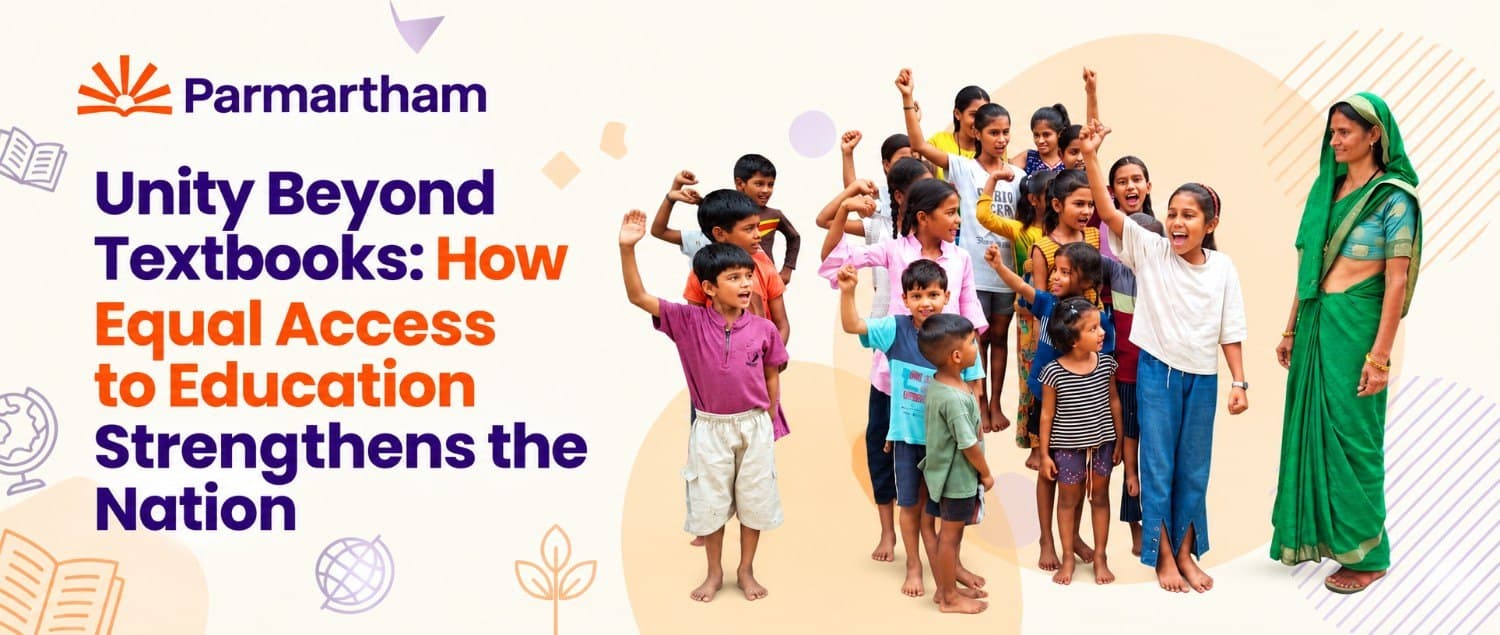
Explore how equal access to education, mentorship and skills can strengthen national unity in India and create fairer opportunities for every child.
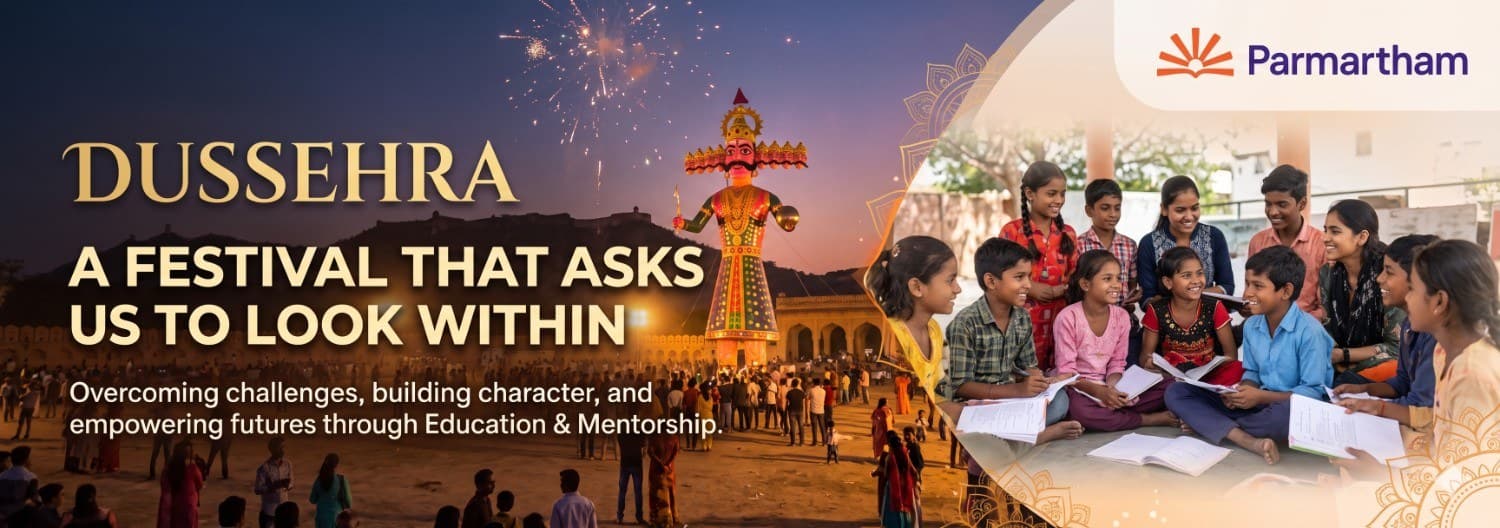
Discover the meaning of Dussehra through education, compassion and skill development, and how Parmartham empowers young people to build a brighter future.
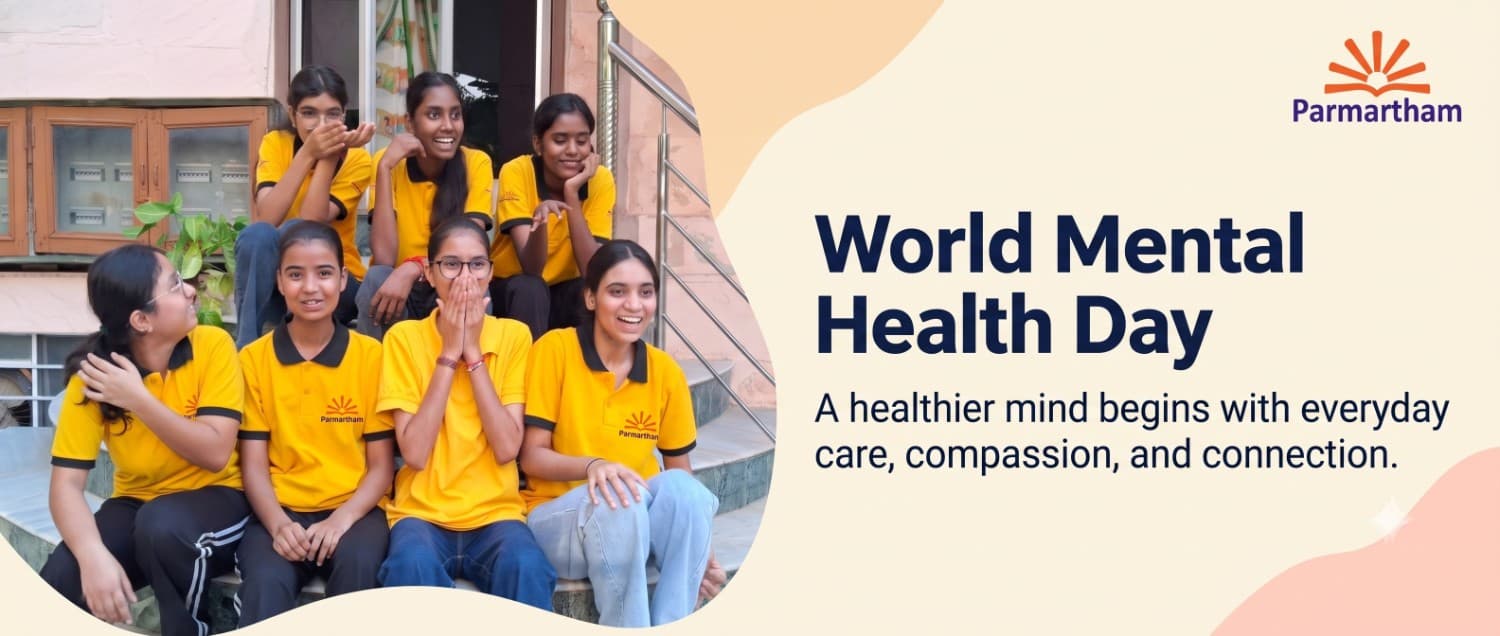
This World Mental Health Day, learn why mental wellbeing matters and how Parmartham supports it through student counselling, daily yoga and camps open to all.
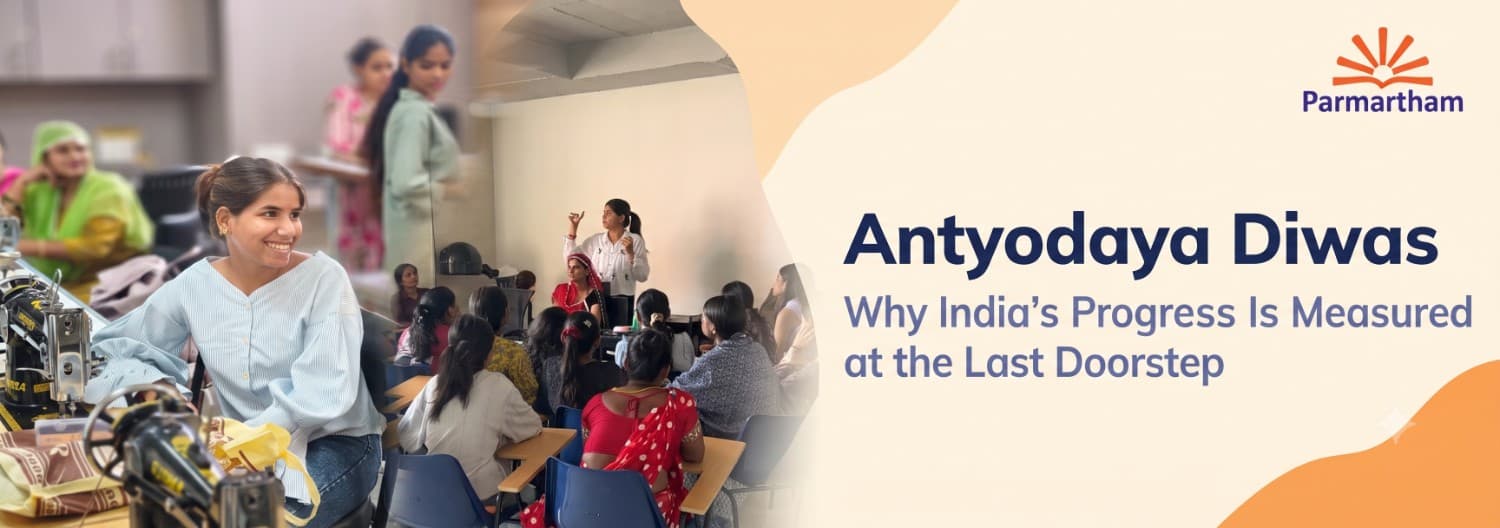
Learn the meaning of Antyodaya Diwas and how Parmartham, a Jaipur NGO, helps youth and women become self-reliant through free skill training under Kaushal Vikas.