


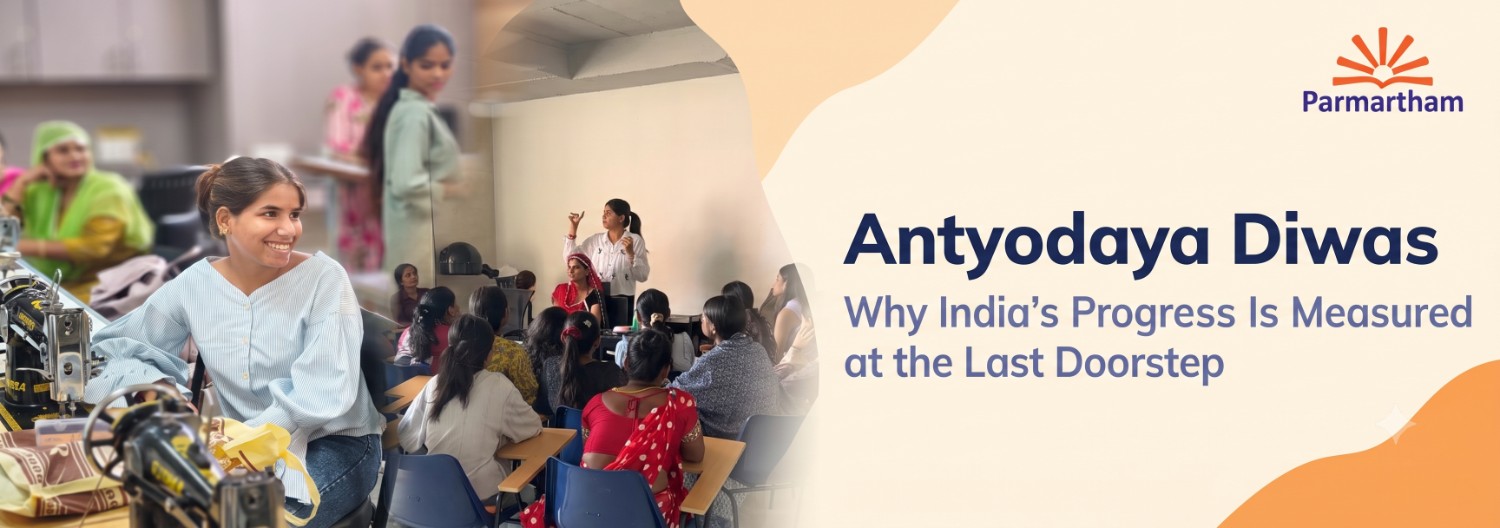
Think of a young woman in a Jaipur basti who finished Class 10 three years ago. She is capable and willing to work, but no one has ever taught her a skill that an employer would pay for. The nearest private training institute charges more than her family earns in a month. So she waits, and her family waits with her.
India has millions of stories like hers. Antyodaya Diwas, observed every year on 25 September on the birth anniversary of Pandit Deendayal Upadhyaya, asks us to keep those stories at the centre of how we think about progress.
Antyodaya joins two words: "antya", meaning last, and "udaya", meaning rise. Pandit Deendayal Upadhyaya held that a nation's development should be judged not by its averages but by what reaches the poorest person within it. It is an uncomfortable standard. The economy can grow and new industries can arrive while a family at the margins remains exactly where it was ten years ago.
Seen this way, Antyodaya is less a slogan than a test that can be applied to any programme or policy. Does it end dependence, or merely manage it? Does it open real economic and social opportunity? Does it bring education, healthcare and employment within reach of those who have the least? And does it allow a person to live with dignity and make their own decisions?
It is tempting to assume that poverty persists simply for lack of opportunity, and that offering a course or a job will solve it. Our work at Parmartham has taught us that the problem is usually a cluster of barriers that hold one another in place.
The first is skill itself. Many young people leave school without anything an employer will pay for, which confines them to irregular daily-wage work. The second is cost, and it goes beyond course fees. Even a free programme asks a family to pay for travel and to give up whatever the learner might have earned that day. The third is guidance. Many people do not know which course suits them or which trades are in demand nearby. The fourth, particularly for women and for families in slum communities, is safety. A training centre that feels unsafe or lies too far from home may as well not exist.
Remove one barrier and the others still hold. A free course in an unsafe location fails women. A safe centre teaching a trade that nobody hires for fails everyone. Lasting change comes only when all four are addressed together.
What happens when someone does make it through? The change rarely stays with one person.
When a mother begins earning from tailoring, the first things to improve are usually her children's schooling, the food on the table and the family's access to a doctor. Her voice in household decisions grows along with her income. Her children grow up seeing work and self-reliance as normal, which shapes what they expect from their own lives. And if she opens a small shop, she may well go on to train or employ a neighbour.
This is why we regard skill training as one of the most efficient forms of social investment. The cost of training is paid once, while the income it makes possible continues for years and supports an entire household.
Parmartham is a Jaipur-based NGO working in education and skill development, and we believe skill is the shortest bridge between dependence and dignity. Through our Kaushal Vikas programme, we offer practical, market-relevant training completely free of cost to youth and women aged 15 and above. Every course is chosen for the livelihood it leads to:
• Stitching and Tailoring: A low-investment trade that can be run from home or a small shop
• Beauty and Wellness: Preparation for salon employment or a small setup of one's own
• Computer and IT Skills: Basic computer literacy, office applications and digital tasks
• Hospitality and Tourism: Front-office work, customer handling and housekeeping
• General Duty Assistant: Patient-care training for hospitals and home-care roles
• Accounting and Taxation: Basic bookkeeping, GST and accounting
• Business Communication: Spoken English, confidence building and customer handling
• Electrical and Electronics: Wiring, installation, and the repair and maintenance of electrical and electronic equipment
Behind this list are three choices that respond directly to the barriers described above. Training is free, so cost never decides who gets to learn. Confidence is built alongside competence, because many learners, especially women entering work for the first time, need belief in their own ability as much as the skill itself. And our centres are run as supportive spaces where learners can ask questions and make mistakes without hesitation.
More than 1000 people have benefited from Parmartham's Kaushal Vikas initiative last year. Each of them represents a household that has moved a step further from dependence.
No single organisation can reach the last person on its own. If this work matters to you, there are three simple ways to be part of it. You can donate to fund free training for someone who could never afford the fees. You can volunteer your time and experience to mentor young people and women. Or you can simply tell someone in need that this training exists, because many of those who would benefit most never hear about it.
Antyodaya Diwas asks us to measure progress at the last doorstep. Parmartham works toward that every day through Kaushal Vikas, and we would be glad to have you with us.
• Email: info@parmartham.org.in
• Call or WhatsApp: +91 8302883596
1. What is Antyodaya Diwas and when is it observed?
Antyodaya Diwas is observed on 25 September, the birth anniversary of Pandit Deendayal Upadhyaya. It highlights the need to extend development, welfare and self-reliance to the poorest and most disadvantaged person in society.
2. What courses are offered under the Parmartham Kaushal Vikas programme?
Courses include Stitching and Tailoring, Beauty and Wellness, Computer and IT Skills, Hospitality and Tourism, General Duty Assistant, Accounting and Taxation, Business Communication, and Electrical and Electronics.
3. Is there any fee for training at Parmartham?
No. Parmartham provides all of these training programmes completely free of cost to people in need.
4. Who can enrol in the Kaushal Vikas programme?
The programme is open to youth and women aged 15 and above.
5. How does skill training lead to self-reliance?
Skill training opens opportunities for employment or self-employment, which improves financial stability, builds self-confidence and allows a person to support their family independently.
Also Read:
Hariyali Amavasya 2026: Forty Parmartham Students, One Morning at Kishan Bagh
When She Earns, the Family Rises: How Women's Economic Independence Strengthens Families
This World Mental Health Day, learn why mental wellbeing matters and how Parmartham supports it through student counselling, daily yoga and camps open to all.
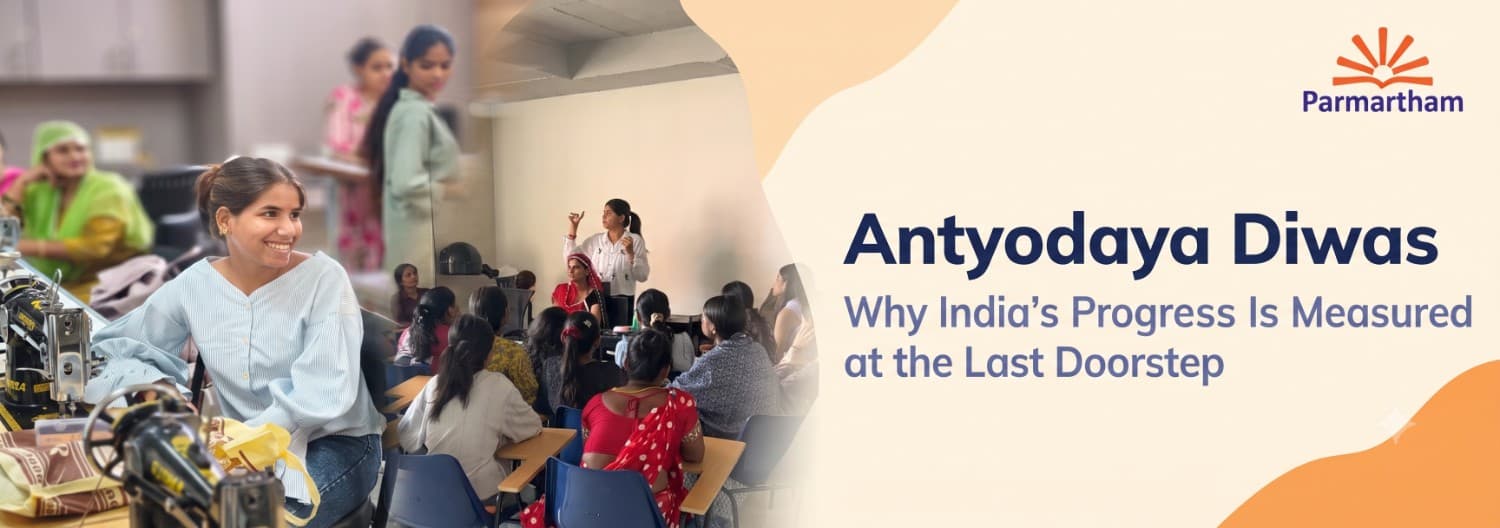
Learn the meaning of Antyodaya Diwas and how Parmartham, a Jaipur NGO, helps youth and women become self-reliant through free skill training under Kaushal Vikas.
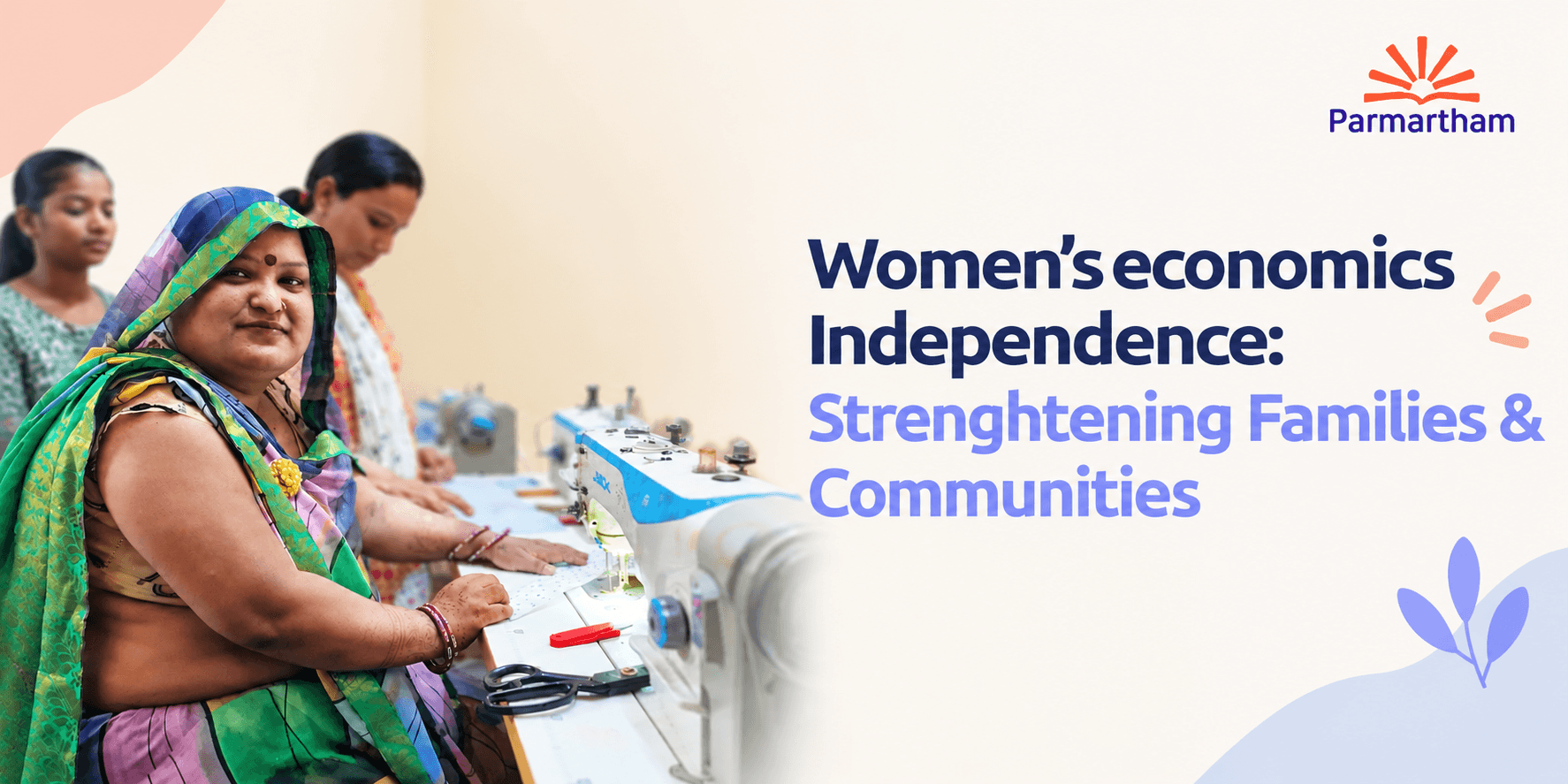
Learn how women's economic independence uplifts families and communities, and how Parmartham's Kaushal Vikas offers free skill training to women in Jaipur.
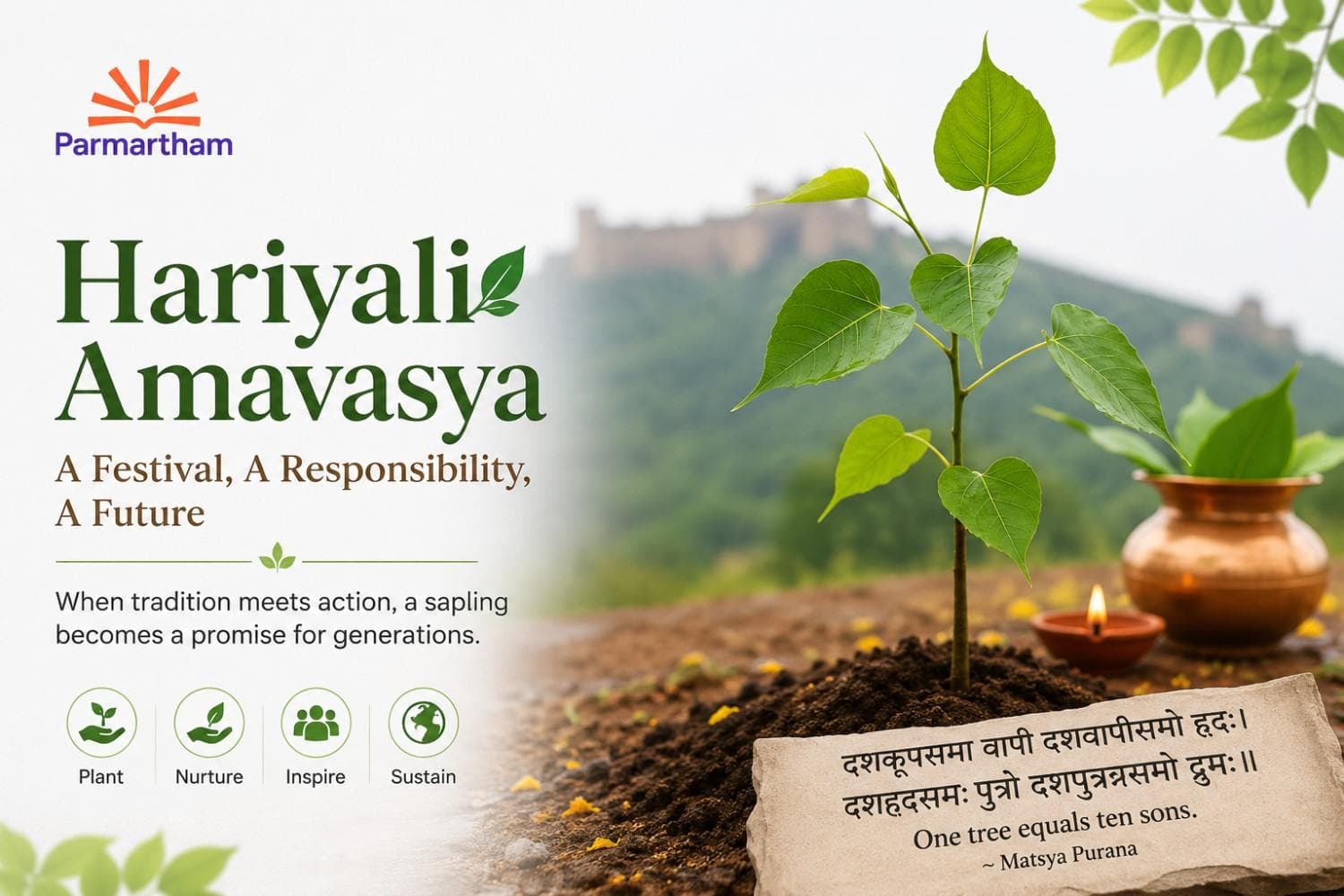
Discover how 40 hostel students explored Jaipur's Kishan Bagh on Hariyali Amavasya, linking ancient traditions of tree worship with real-world science.